Saturday, June 2, 2012

Concept Furniture


Beyond the usual

Give your home a personality that makes it stand apart, says Shilpa Sachdev


A home offers a wide canvas that can be decorated in a myriad ways. Forget the interior designer and try your own hand at giving your home a new picture. Adding a touch of fusion décor is a good way to start because it enlarges the scope of things you can do. And it need not be something very drastic or big; one can start with small and simple changes or simply keep an eye on interesting innovations hitting the market and include them as a part of the grand design.
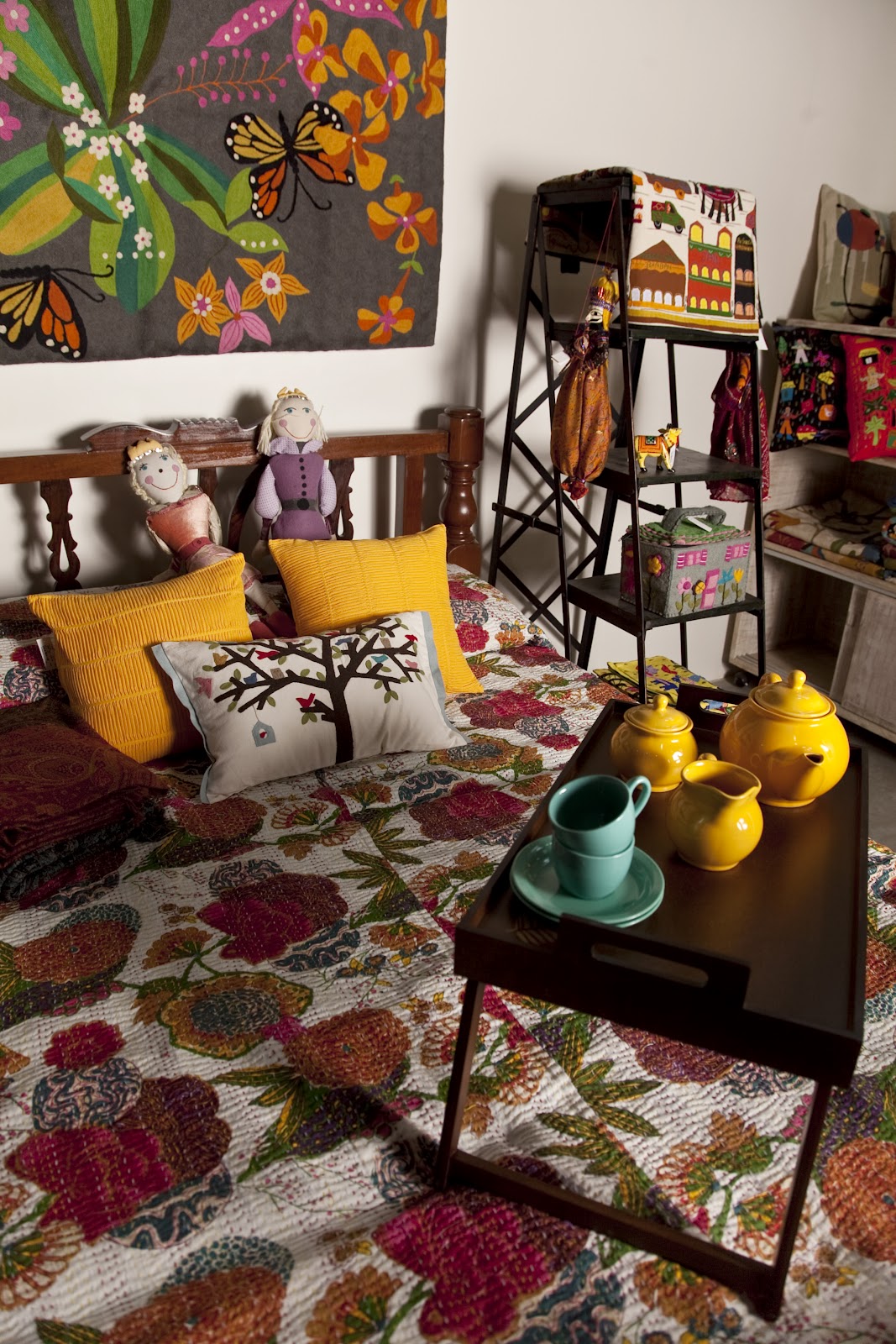
The charm of handicrafts is something that never goes out of style. Full of colour and craft, these products add warmth to any home. Vina Mody, the founder-director of Contemporary Art and Crafts says, “It is important that your home looks lived in. Try and buy Indian, buy local products and support local craft. Don't worry too much about what's in style or what's in fashion at the moment as these will keep changing. A home needs to grow organically and needs to be filled with things you love- not things that are in fashion. The difference comes about when you are not scared to mix and match - place an ethnic Indian dhurrie under a modern industrial table or maybe combine some contemporary screen printed cushion covers with a beautiful Ikat bed cover.”
Formally trained in product design, designer Manasi Manjrekar recently launched her store Confluence Elite that houses an eclectic range of furniture designs. In her opinion, concept furniture is a growing trend and an excellent medium to bring home something different and unique. Manjrekar shares, “Furniture is a basic need in the house. The importance of a well-designed space is assuming importance especially today when the buyer is well-travelled and has a particular need. Concept furniture is a borderline art piece, which has a strong story and reason to exist. The attempt is to combine utility with art and offer it at an approachable price but since it is not your usual piece of furniture, there is a price tag attached. For those who are looking out for something different and particular, concept furniture is something to look out for.”
Some of the pieces that stayed with us were the huge open showcase wherein the lower three racks came off to make a stairway to help shorter people reach the full height of the display. The Vajrasan chairs were an absolute ergonomic delight. The Red Indian themed chandelier was a nice change. Made from glass bottles and infused with bright colour feathers, the chandelier can be nicely hung loose to ornament a central place in the house or beautify an odd pillar. The simply enchanting popsicle can be carried wherever one goes. Plant it into the floor and you have made yourself a place to sit just about anywhere. A set of boxes placed one over the other in a corner also caught our attention as an interesting corner piece; you can choose the number of boxes you want to stack up.
The beauty of concept furniture is that it cannot be replicated or mass produced, which makes it very extra-ordinary and special. It is not your regular idea of a table or chair. Every piece has an inspiration that is the unique to the artist behind the piece of work.
Imagine a traditional trunk customised to your choice? If you have loved the timeless appeal of the traditional Indian trunks, there are some chic and functional varieties for the connoisseurs to choose from. Each trunk by the Trunks Company, Jaipur – makers of avant-garde luxury fashion trunks, is a unique blend of aesthetics, legendary charm and contemporary usage. What’s more - they can be customised according to dimensions and leather colours to suit the décor, but keeping in mind the functionality and grandeur of the trunk. Says designer Livio Delesgues, “Apart from their delightful appearance that renders great aesthetic value to an available space, these trunks are extremely functional as well. The Bar Trunk is an epitome of luxury personalized to match the requirements of its connoisseurs. The Safe Trunk cherishes valuables with strong vault and is an ornament in itself. The other bespoke trunks such as the Wardrobe Trunk, Vanity Trunk, Dressing Trunk are an amalgamation of whimsical architecture and design to adorn oneself with exclusive luxury. In fact, the Watch Trunk is a cherished possession for all watch collectors across the country.”
The furniture and accessories for the home are getting quirky, experimental and thought-provoking. A simple change of motif or colour or even a rare piece of accessory can elevate the depth of your home décor. The trick lies in how you do it differently!


Khar Residence

Laced with grandeur

A thoughtful approach to design transforms this house into a ravishing living space, says Shilpa Sachdev


When Amit Walavalkar of Adorn Space Concepts took up designing this single floor apartment in Khar, all he had was an empty canvas in the form of a raw flat. But drawing a fine balance between aesthetics and utility, Walavalkar has managed to create an enchanting residence. Working on the client brief to keep it functional and maintenance free, Walavalkar has adopted a minimal and contemporary approach to the house.
Since the house occupies an entire floor, a grand entrance welcomes the visitors from the lift. The entrance is well accessorized with two wrought iron statues and some plants and paintings to bring in natural elements. The Italian flooring and yellow LED lights add to the grandeur of the place.
As one enters the house, a stunning lobby gives a quick preview of the big picture waiting inside. One wall of the lobby, which is also the common wall of the building stairway, has been punctured to give it a glass panel. From the outside, the glass has been protected with a spiral design grill, which serves two purposes - it allows the natural light to flow in to the lobby and also the design of the grill makes for aesthetic delight. The lobby contains a sleek rectangular shoe rack with a small orange ledge for the visitor to rest. The shoe rack contains lights inside that reflect the spiral design on the grill when put on. Silver vases gathered in a corner make for ideal accent pieces for the lobby, which is further accentuated with a chandelier.
While most of the house has been kept white in colour, fumed veneer in wenge colour dominates the furniture of the house while the flooring remains Italian overall. A streak of orange colour runs throughout the house as a distinct highlighter in some way or the other. Walavalkar has played with a lot of LED lights and also kept the balance of natural light intact.
The large living room has been divided into a living area, and a dining area that directly faces the kitchen. The two are separated with a sleek duco-painted cabinet console, which is accentuated with bright flowers and knick knacks on top along with a mirror frontage. Apart from the contemporary sofa, the living area has been given a fusion slant with the help of two custom-made vintage chairs polished with silver leafing. The ceiling of the living area has a pixel blast design mirror and a chandelier to complete the look. The dining table set has been kept white with an abstract table design that stands apart. The fan here is the most interesting as it functions as both a light as well as a fan. Walavalkar says, “The blades come out when the fan is switched on and they turn inwards when not in use and only the light remains”. The curtains are remote controlled.
A small powder room has been incorporated in the living room and done up tastefully. It contains sensor lights and an onyx wash basin that is backlit. The pixel design continues on the wall of the powder room in the form of a back-painted glass. The black Markina flooring looks splendid.
The kitchen faces the dining area and has been given textured walls on either side to bring in some design change. The pixel design is repeated in the form of orange highlighters on the breakfast table. The appliances are in-built and the entire kitchen is white with duco painted cabinets and a white Corian platform.
Just next to the living room lies the Audio-Visual room and just as it should be, the room has been kept dark to create the ambience. The red and black horizontal striped wallpaper does the needful. An L-curve sofa makes for a comfortable lounging space. The roller blinds cover the glass that is the common wall between the AV room and the entrance. They can be simply pulled up if natural light is needed in the room. A projector screen has been rightfully provided for.
The children room has been also designed very creatively in the colours of white and orange. Bunk beds have been provided with extra pull-outs for storage. A convertible study area has been intelligently incorporated, which can be closed to make space when not in use. The bathroom in the children room had no window so the walls of the bathroom have been made of a blend of clear and frosted glass to maintain the openness as well as the privacy. The barcode style design runs throughout the kids’ room. The cycle print roller blinds cutely blend with the theme of the room. In the bathroom, blues and whites have been used to complement the orange in the main room. The blue pearl granite on the flooring, the blue floral wall tiles and the chequered white tiles with blue grouting have been used in a seamless flow to continue to the grid.
Black, white and silver are the colour tones used in the master bedroom, which has a leather finish bed and designer curtains. A floral motif runs through the design of the master bedroom, repeated on the sheers, cushions and wall paper. The wardrobe design is most interesting as it looks like a well-designed mural from afar. Walavalkar says, “The client did not want a usual wardrobe with handles so we have scooped the MDF at odd lengths to reduce the weight of the shutter and create the required design. The wardrobe has also been given in-built lights that prove helpful in the night.” The duct in the room that lies bang opposite the entry door has been converted into the dressing area with a huge mirror covering the door. The enclosed shower cubicle gets a gray Travertino spread.
The parent’s room has been kept simple and contains a recliner chair in a corner to make for an easy read and a TV unit with a chest of drawers to stock up their essentials. Use of mirror has been made to create an illusion of space where necessary. Use of red Lavante marble adds a dash of colour to the room.
With the maximum burst of orange colour, the guest room is the most jazzed up. The peach wall paper is balanced with textured ivory walls. The brown Pothoro marble in the bathroom is accessorized with stenciled steel design at the borders.
The house has a large floor plate to which the designer has convincingly managed to add interesting elements to create a splendid piece of work.


Rain Water Harvesting


Ease the pressure

Make the most of the upcoming monsoons by harvesting the rain water, says Shilpa Sachdev

Rains are the best source of fresh water. They are perennial and free falling. If conserved properly, the rain water is good enough to take care of a good percentage of our daily water supply needs. This not only means less dependence on external sources of water but is also a more sustainable option in the long run. More and more housing societies across the city have started adopting rain water harvesting and are reaping rich benefits.
The housing society at Kalpataru Gardens in Ashoknagar, Kandivali (E) set up a rain water harvesting unit three years back and have succeeded in saving up on their ground water reserves. Chairman of the society Vasant Patil says, “The absorption levels have lowered and the amount of run down water has gone up in the city. The water supplied by the municipal corporation is around 40-50% of the sanctioned quota of 90 litres per member of family of five i.e 450 litres per day per family. It is not possible to meet this requirement only by the water supplied by the municipal corporation. We have set up a ring well around the bore well that collects rain water from the terrace and the surface areas through storm water drains during the monsoons. It has helped increase the output of the bore wells. Earlier, the water levels would dry up by around January but now we continue to get sufficient water till May end, which is a good three-four months extension.”
Ghatkopar resident Gunvant Sheth also got a rain water harvesting system installed in his bungalow. He says it is important to make use of available resources. “You cannot only go on taking water from the ground. You also need to give back and replenish the resources. Rain water harvesting is an ideal way to do the same so that in the longer run you don’t have to face a crisis. The water charges by the municipal authorities are consistently going up. Using filtered water for non-potable purposes is a criminal wastage of resources. We have installed a rainwater harvesting system only last year but it will take at least two more years for the results to start pouring in. Some rebates from the government will encourage the people to take it up more seriously.”
Rain water harvesting is the best and the easiest tool to manage water resources according to Sandeep Adhyapak of Waterfield Technologies who have designed rain water harvesting projects for many housing societies. He says, “We installed the rain water harvesting system in our society Redwoods Co-operative Housing Society in Mulund in December 2007 at a cost of Rs 5.5 lakh. In the last five years, the water savings have been to the tune of Rs 40 lakhs when compared to the cost of the tankers that were consumed by the society. It is a one-time cost but the benefits accrue over the lifetime. It ensures that a society becomes self-sufficient and sustainable and also ensures equitable distribution of available water resources. The system aims at decentralising the water supply system. At least a part of the water requirement can be fulfilled by channelising the rain water collected from terraces and roofs. By recharging the ground water, one can also put a check on its salinity levels.”
He suggests that for those interested, they must take an opinion from an expert who understands the subject well and ensure the system is practical and cost effective. He also feels that there is a need for a clear cut framed policy from the municipal corporation that lists down the criteria for consultants and also offers subsidies for such projects. “The Brihanmumbai Municipal Corporation has made it mandatory for all new buildings to have rain water harvesting system but nothing has been done about the old buildings. In places like Chennai there is Rs 1500 rebate given on a rain water harvesting project and in Indore it is 6%. We need similar incentives to encourage the movement in Mumbai. The Thane Municipal Corporation has already installed such systems in the fire brigade building and their ward office in Kopri. Seeing is believing. The municipal authorities should showcase rain water harvesting projects by installing them in their own projects and create case studies so that people can visit and see how the process actually works. Then they will be more comfortable and open to the idea.”
Giving their view, a senior office from the Municipal Corporation of Greater Mumbai (MCGM) says, “The corporation is supplying good water to the citizens at Rs 3.50 per kilo litre. When you get something so cheap the importance is not felt. Compare 1000 litres with 1000 bottles of mineral water and the amount you pay for it will run into thousands of rupees. People waste a lot of water without giving it a thought because they are not used to scarcity in the real sense. Having wells and bore wells is an alternative but Mumbai being a coastal city, the more water you draw from the ground, there are more chances of sea water ingression. That is why it is important to harvest rain water and use it in time when it is available. Harvesting roof top rain water will reduce pressure on water resources and help in creating ground water reserves, which will in turn curb sea water ingression. We have made it mandatory for new buildings but for old buildings we already have had an agreement which can’t be changed unilaterally. It is a voluntary exercise and hence moving at a slow pace. The proposals for a price hike in water charges as well as providing subsidies are under consideration. The need of the hour is to create more awareness and sensitise people.”
The MCGM has taken up a few initiatives for the same. The officer adds, “We have a technical cell for rain water harvesting where we give guidance to societies free of cost if they want to set up a RWH unit. We have already attended to more than 400 societies on the same. What we need is a letter of intent from society's letterhead, layout plan, bore well/well details and water bill. Over the last six year, we have also started a ‘jal mela’ which is an open forum where people can discuss water issues. We need to create a culture of conserving water so we are targeting children as a long term plan. We are releasing a set of school books for all standards to build the value system. Mumbai is huge and people of different cultures reside here so they can’t be approached in one single pattern. But efforts are on."